
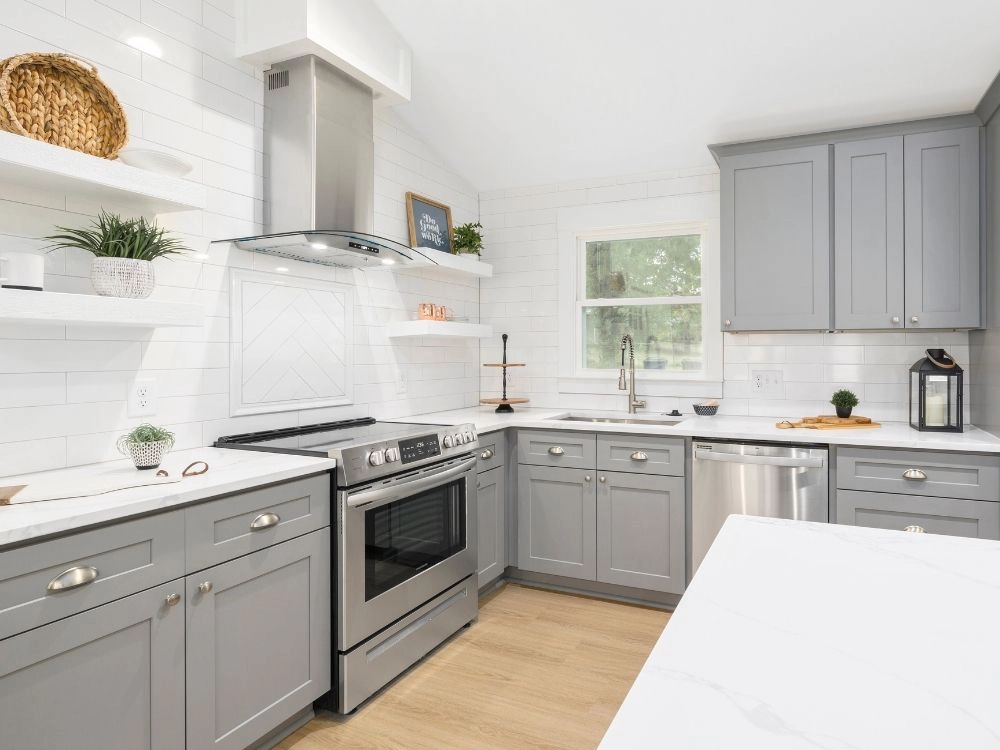
Built-in shelves can become one of the most visually interesting parts of a room, but filling every open space rarely gives them the polished look homeowners want. The best approach to styling built in shelves is to combine useful items with decorative pieces while leaving enough open space for each object to stand out.
Books, framed photos, artwork, baskets, plants, and personal collections can all work together. The key is creating balance instead of trying to make every shelf perfectly symmetrical.
Below, we’ll walk through practical ways to style built-in shelving so it feels intentional, personal, and connected to the rest of your room.
Start With Less Than You Think You Need
One of the easiest mistakes to make when decorating built-in shelves is trying to fill every inch.
Instead, begin with fewer items.
Remove everything from the shelves first, then bring back only the pieces you actually want to display. This gives you a blank starting point and makes it easier to see how different objects relate to one another.
Try beginning with:
- Favorite books
- Framed photos
- Artwork
- Decorative bowls
- Small plants
- Vases
- Baskets
- Objects with personal meaning
Once the main pieces are in place, you can decide whether the shelves need anything else.
Leaving some empty space often makes the items you do display look more intentional.
Use a Mix of Heights and Shapes
Shelves filled with objects of similar height can look flat.
Instead, combine pieces with different shapes and proportions.
For example, one shelf might include:
- A short stack of books
- A taller vase
- A small framed photograph
Another might have:
- A decorative bowl
- Two vertically placed books
- A plant with softer, organic lines
Changing the height of objects creates movement across the shelving and keeps the eye traveling from one section to another.
You do not need every shelf to follow the exact same pattern.
The goal is visual balance, not repetition.
Style Books Horizontally and Vertically
Books are one of the most flexible elements for built in shelf decor.
Instead of arranging every book vertically like a library shelf, mix vertical groupings with horizontal stacks.
A horizontal stack can also act as a platform for a smaller decorative object.
For example:
- Place three or four books horizontally.
- Add a small bowl, framed photo, or decorative object on top.
- Leave a little breathing room around the grouping.
You can also use vertical books to provide height beside a shorter object.
If your built-ins are in a living room or family room, combining books with decorative objects usually feels more relaxed than filling every shelf entirely with books.
Create Small Groupings Instead of Scattering Objects
Rather than placing individual objects evenly across an entire shelf, create small groups.
Groups of two or three objects often feel more intentional.
For example:
- A vase + framed photo
- A stack of books + decorative object
- A plant + small bowl
- Two pieces of pottery in different heights
Grouping items also helps keep shelves from looking cluttered.
Instead of thinking about each individual object, think about each shelf as a small composition.
Add Artwork to the Back of the Shelves
Artwork does not always have to hang on a wall.
Small framed prints, photographs, or artwork can lean against the back of a built-in shelf.
This creates a background layer behind smaller objects.
For example:
- Place a framed print toward the back.
- Add a small stack of books in front.
- Finish with a decorative object beside or on top of the books.
Layering pieces this way can add depth without requiring a large number of objects.
It can be especially effective on larger built-in shelves where one small accessory by itself might feel lost.
Repeat Colors Throughout the Shelves
Your shelves do not need to match perfectly, but repeating a few colors can help the entire built-in feel connected.
Look at the colors already present in the room.
You might repeat tones from:
- Furniture
- Rugs
- Curtains
- Artwork
- Throw pillows
- Cabinetry
- Wall colors
For example, if your room includes warm wood, cream fabrics, and dark metal accents, those same tones can appear subtly in your shelf decor.
Repeating colors helps the shelving feel like part of the room rather than a completely separate display.
Mix Decorative Pieces With Personal Items
Built-in shelves tend to feel more interesting when they reflect the people who live in the home.
Not every object needs to be purchased specifically for decorating.
Consider mixing decorative items with:
- Family photographs
- Travel keepsakes
- Books you actually read
- Handmade pieces
- Collections
- Family heirlooms
- Meaningful artwork
Personal objects keep the shelves from looking like a showroom display.
The goal is a space that looks finished but still feels like your home.
Use Baskets and Boxes for Less Attractive Items
Built-in shelving can provide useful storage as well as display space.
Decorative baskets and boxes can help hide smaller items that you want nearby but do not necessarily want on display.
Depending on the room, these might hold:
- Remote controls
- Chargers
- Small electronics
- Games
- Craft supplies
- Children's items
- Office supplies
Matching or coordinating baskets can create visual consistency while keeping everyday items organized.
If the built-ins include lower cabinets, those areas can handle even more practical storage while the open shelves remain focused on display pieces.
Consider the Room Around the Shelves
Built-ins should not be styled in isolation.
Look at the entire room before deciding what belongs on the shelves.
For example, if the room already contains many patterns, colors, or decorative objects, simpler shelves may create better balance.
If the room is minimal, the shelves can carry more visual interest.
Also consider the scale of nearby furniture.
Large built-ins beside a substantial fireplace or sectional may need larger decor pieces. Very small objects can disappear visually when placed across a large wall of shelving.
The proportions of the room matter just as much as the individual accessories.
How to Style Living Room Built In Shelves
Living room built-ins often need to balance display and everyday function.
Start with the largest elements first.
These could include:
- Artwork
- Large books
- Baskets
- Plants
- Larger decorative vessels
Then add smaller objects around them.
Avoid putting all of the visually heavy pieces on one side of the built-in. If you have a dark vase on the upper left, for example, another darker element somewhere on the lower right can help distribute visual weight.
You do not need identical items to create balance.
You only need the overall arrangement to feel stable.
How to Style Built Ins Around a Fireplace
Built-ins surrounding a fireplace naturally draw attention because they frame a central architectural feature.
If both sides of the fireplace have shelving, they do not need to be mirror images of one another.
Instead, aim for similar visual weight.
One side might have:
- A large framed piece
- Two books
- A small vase
The other side might have:
- A plant
- A larger decorative bowl
- Several books
The objects are different, but both sides can still feel balanced.
Keeping some repeated materials or colors on both sides can also help tie the arrangement together.
Should Built In Shelves Be Symmetrical?
Not necessarily.
Perfect symmetry can work well in formal spaces, but many built-in shelving arrangements look more natural with asymmetrical styling.
Instead of making every shelf identical, try balancing visual weight.
For example:
- One large object may balance three smaller objects.
- A tall vase on one side may balance a framed artwork on another.
- A horizontal stack of books may balance a vertical grouping elsewhere.
This creates interest without making the shelving feel random.
Avoid Putting Too Many Small Items Together
A large number of small decorative items can make built-ins look cluttered quickly.
If you have several small objects you want to display, group some together rather than spreading them across every shelf.
You can also place smaller objects on top of books or inside trays to make them feel like one intentional arrangement.
Larger objects generally need more breathing room.
Try stepping several feet away from the shelves periodically while styling them.
From across the room, clutter and imbalance are often easier to notice than when you are standing directly in front of the shelves.
Change the Shelf Styling Over Time
Built-in shelves do not have to remain exactly the same year after year.
You can update them gradually as your home changes.
You might:
- Rotate photographs
- Change artwork
- Add seasonal greenery
- Rearrange books
- Replace a few decorative objects
- Display new travel pieces or family keepsakes
Keeping the basic structure of the shelving while changing a few accessories can refresh the room without requiring a major redesign.
Good Styling Starts With Good Built In Shelves
Decorating can improve the appearance of built-ins, but the proportions and layout of the shelving itself also matter.
Shelf height, depth, spacing, cabinetry, and how the built-in relates to the surrounding wall all affect how easy it is to style.
If you are planning new shelving rather than decorating existing built-ins, think about what you want to store and display before finalizing the design.
Our built-in shelves service can help homeowners create shelving that fits the room and its intended use.
Built In Shelving Ideas for Dallas–Fort Worth Homes
Homes throughout Dallas–Fort Worth and North Texas vary widely in layout and style, so there is no single built-in design or styling approach that works everywhere.
A living room built-in may function as a display wall.
A home office might need more book and document storage.
A bedroom may benefit from a combination of shelving and closed cabinetry.
Before choosing a design, think about how you want the built-ins to function after the project is finished.
For homeowners planning custom shelving, we can help create built-in shelves that complement the space and provide practical storage.
Keep Your Built In Shelves Personal
The best shelves usually are not the ones filled with the most decor.
They are the ones that combine good proportions, useful storage, personal objects, and enough open space to let everything breathe.
For styling built in shelves, start with your largest pieces, mix heights and shapes, group smaller objects, repeat a few colors, and resist the urge to fill every open space.
If you are planning new built-in shelves for your home in Dallas–Fort Worth or North Texas, our team at Everett Home Pros can help with the carpentry side of the project.
Call (940) 466-4636 or visit our built-in shelves service page to discuss your project.
Frequently Asked Questions
How do you style built in shelves without making them look cluttered?
Start with fewer objects than you think you need. Use a combination of books, artwork, decorative items, plants, and personal pieces while leaving open space between groupings.
Should built in shelves match on both sides?
They do not have to be identical. Instead of perfect symmetry, aim for similar visual weight by balancing larger and smaller objects across the shelving.
What should I put on living room built in shelves?
Common choices include books, framed photographs, artwork, plants, baskets, decorative bowls, vases, and personal keepsakes. A mix of practical and decorative items usually works well.
How many items should go on each shelf?
There is no fixed number. Larger shelves may support several objects, while smaller shelves may look better with only one or two groupings. Focus on balance and open space rather than filling every shelf.
How do you make built in bookshelves look expensive?
A polished look usually comes from thoughtful spacing, larger statement pieces, coordinated colors, layered artwork, books, and restraint. Avoid overcrowding the shelves with too many small accessories.
Can built in shelves include storage as well as display space?
Yes. Open shelving can be combined with baskets, boxes, or closed cabinetry to provide practical storage while keeping visible shelves organized.